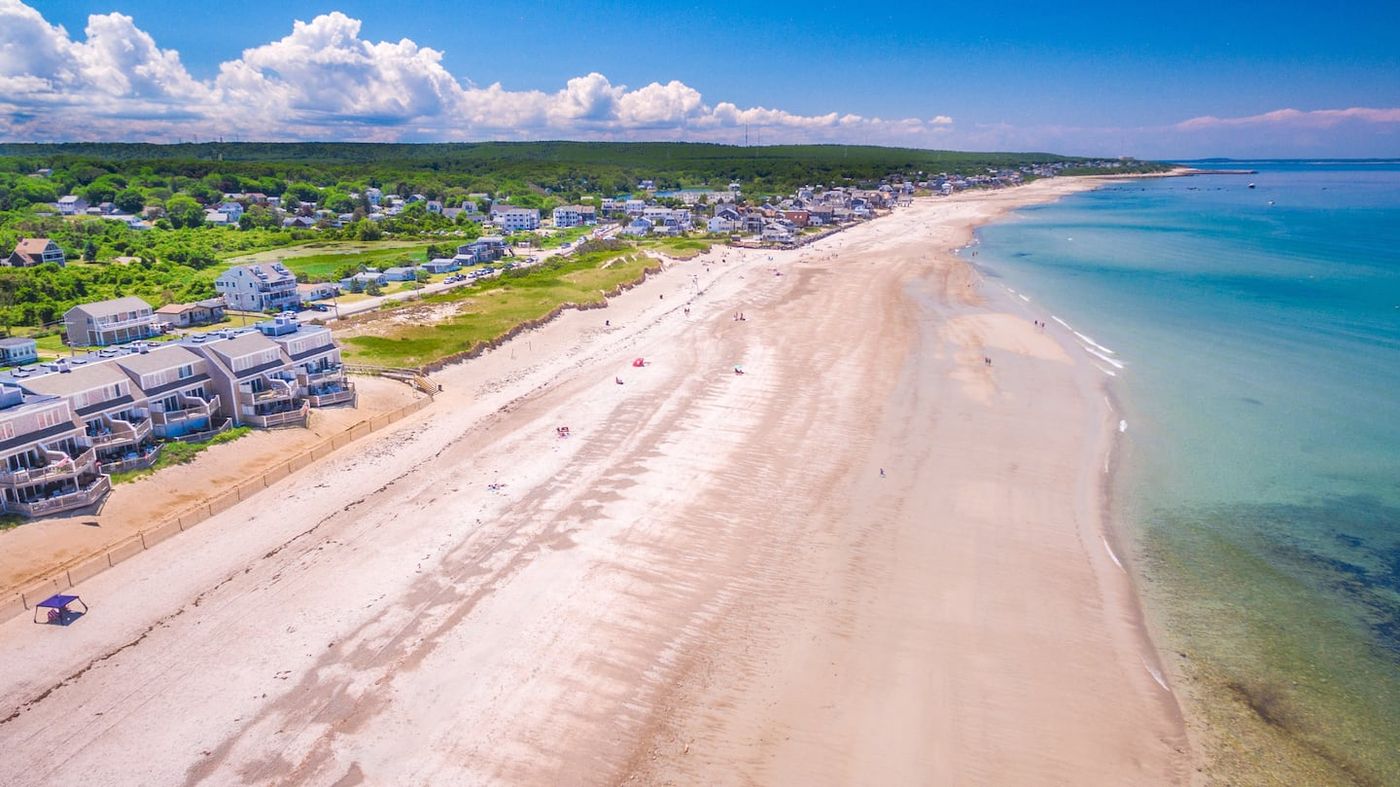
White Horse Beach is a classic crescent of sand on Cape Cod Bay, in the village of Manomet in Plymouth, Massachusetts. "Over the Dunes" sits at its southern end, along Taylor Avenue — a stretch locals have long known simply as Taylor Avenue Beach.
Flag Rock
At the north end of the beach stands a great boulder the old maps call White Horse Rock — though almost everyone now knows it as Flag Rock. As local lore has it, teenagers painted an American flag across its face in the summer of 1941 to cover over a swastika that had been scrawled there. Winter storms wore the paint thin until the old mark began to show through again, so the following Fourth of July the flag was painted fresh.
The Irish Riviera
From the 1940s through the 1960s, White Horse Beach and the rest of Manomet were part of what people fondly called the "Irish Riviera" — a summer haven for families of Irish descent coming down from Dorchester, South Boston, and Somerville to rent cottages by the water.
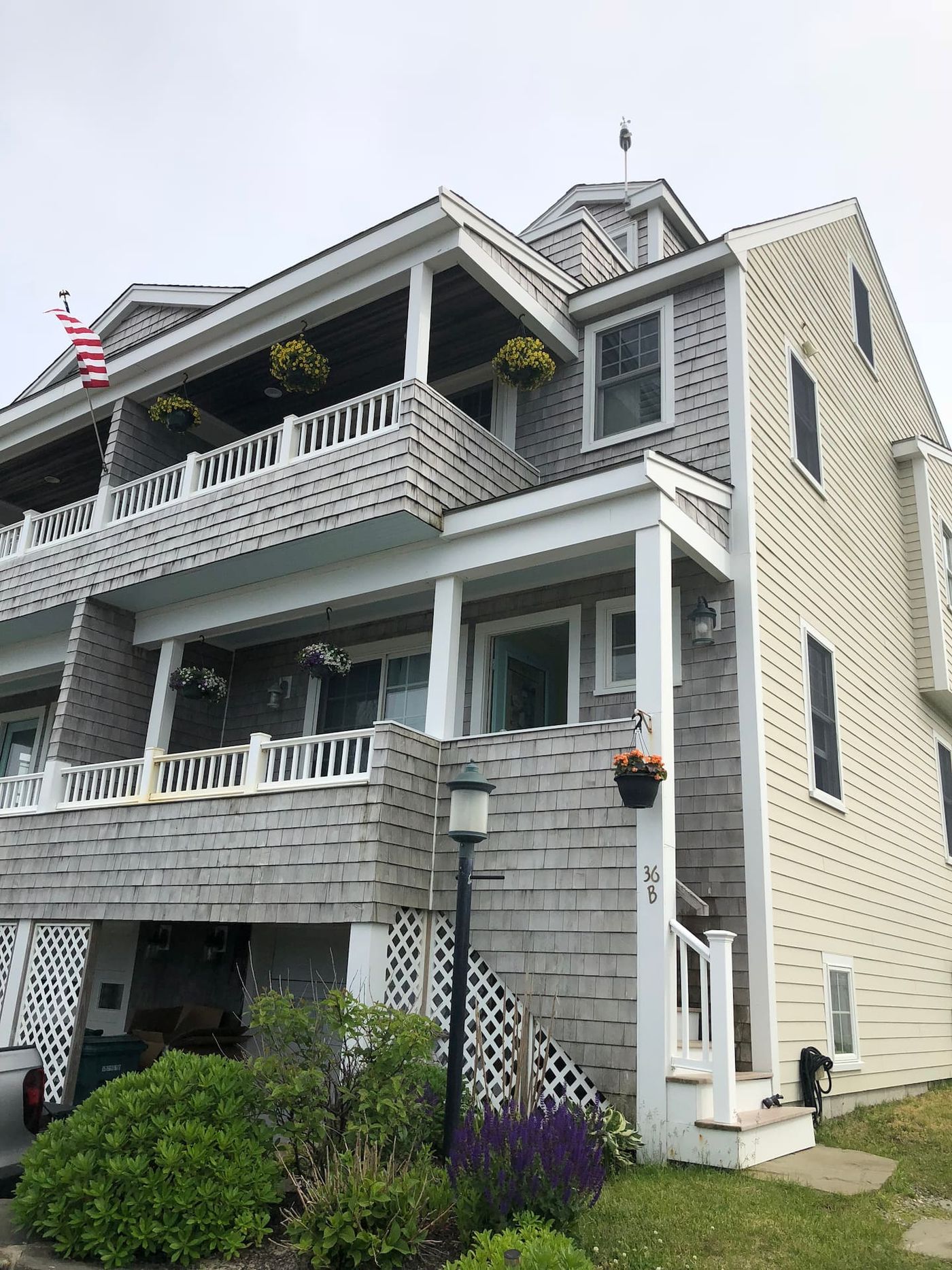
Many of those little summer cottages still line the streets back from the sand. Plenty of them, like this one, have since been winterized and lived in year-round, but the easy, salt-and-sunscreen feel of those summers hasn't entirely gone anywhere.
Bonfires on the beach
White Horse Beach keeps its own holiday. The village's Independence Day tradition falls on the night of July 3rd and reaches back to the 1800s, when residents would pile driftwood and scrap along the sand and set it alight after dark — leaving the rising tide to put the fires out somewhere in the small hours.
These days the bonfires are smaller and the town asks for permits, and parking near the beach is tight that night. But stand on the sand after sunset on the third and you're taking part in something more than a century old.
Manomet and the Wampanoag
Long before any of this, the land took its name from its first people: Manomet is named for the Wampanoag village that once stood among the Manomet Ponds, just inland from the shore. People have lived and fished along this coast for thousands of years.
Up on Manomet Point, a stone monument marks where the Manomet Point Life-Saving Station stood from 1874 — a memorial to the surfmen who once rowed open boats out into the breakers to reach ships in trouble. Today the name also belongs to Manomet, a conservation-science center that has studied the birds and shoreline of the region for decades.
America's hometown
A few miles north along the bay is Plymouth itself — where the Mayflower came ashore in 1620. You can stand at Plymouth Rock, step aboard the Mayflower II, and walk the living-history streets of Plimoth Patuxet, all within a short drive of the front door.
It makes for an easy day: history and lobster rolls in town, then back over the dunes in time to watch the tide turn.